
TL;DR
Try It On AI fits users who want broader style control and polished professional variety, while Headshot Kiwi appeals to fast, simple profile refreshes with a lighter setup path. LinkedIn users and founders should prioritize realism, expression quality, and clothing accuracy over raw image volume.
AI headshots have moved from novelty to a normal career asset, especially for LinkedIn profiles, founder bios, remote teams, and creator media kits. Try It On AI vs Headshot Kiwi is a practical comparison because both tools promise professional-looking photos without a studio session, but they serve slightly different needs. AI headshot generator: a software tool that uses uploaded selfies or portraits to create new profile images with professional lighting, clothing, backgrounds, and facial presentation. For people comparing options beyond these two, Looktara offers a friendly path for creating profile-ready images without treating headshots like a complicated design project.
Table of Contents
Try It On AI vs Headshot Kiwi at a glance
Try It On AI is the better fit for style variety and polished professional presentation, while Headshot Kiwi is better for quick, simple headshot generation with fewer decisions.
SERP research for this comparison showed 122 total results and several list-style reviews, which means searchers are mostly comparing practical outcomes rather than model architecture. One roundup by Artturi Jalli listed Try It On AI at 4.2/5 and Headshot.Kiwi at 3.9/5 in a broader AI headshot generator test. That does not settle the choice, but it suggests both are credible enough to compare closely.
Key insight: the best AI headshot platform is not the one with the most images. It is the one that creates a believable face, useful wardrobe options, and a photo that fits the intended profile context.
Quick comparison table
| Category | Try It On AI | Headshot Kiwi | Best fit |
|---|---|---|---|
| Realism | Strong for polished professional looks | Strong for simple profile use | Depends on photo inputs |
| Clothing styles | Better for varied business looks | Better for straightforward profile outfits | Try It On AI |
| Expression quality | Better when inputs include varied smiles and angles | Good for neutral, clean expressions | Try It On AI |
| Setup effort | More style choices can mean more decisions | Snippet data notes a simple upload flow with 13 selfies | Headshot Kiwi |
| Editing flexibility | Better for users who care about selection and refinement | Better for fast delivery and fewer steps | Try It On AI |
| Value | Better when several roles or platforms need images | Better when one profile needs a quick refresh | Split |
The table favors different use cases rather than naming one universal winner. A sales leader, job seeker, Shopify founder, and dating app user rarely need the same image. A crisp LinkedIn photo should look credible and current; a creator portrait can carry more personality.
Which platform creates more realistic headshots?
The more realistic platform is usually the one that preserves facial identity while correcting lighting, wardrobe, and background distractions without making the subject look overly smoothed or artificial.
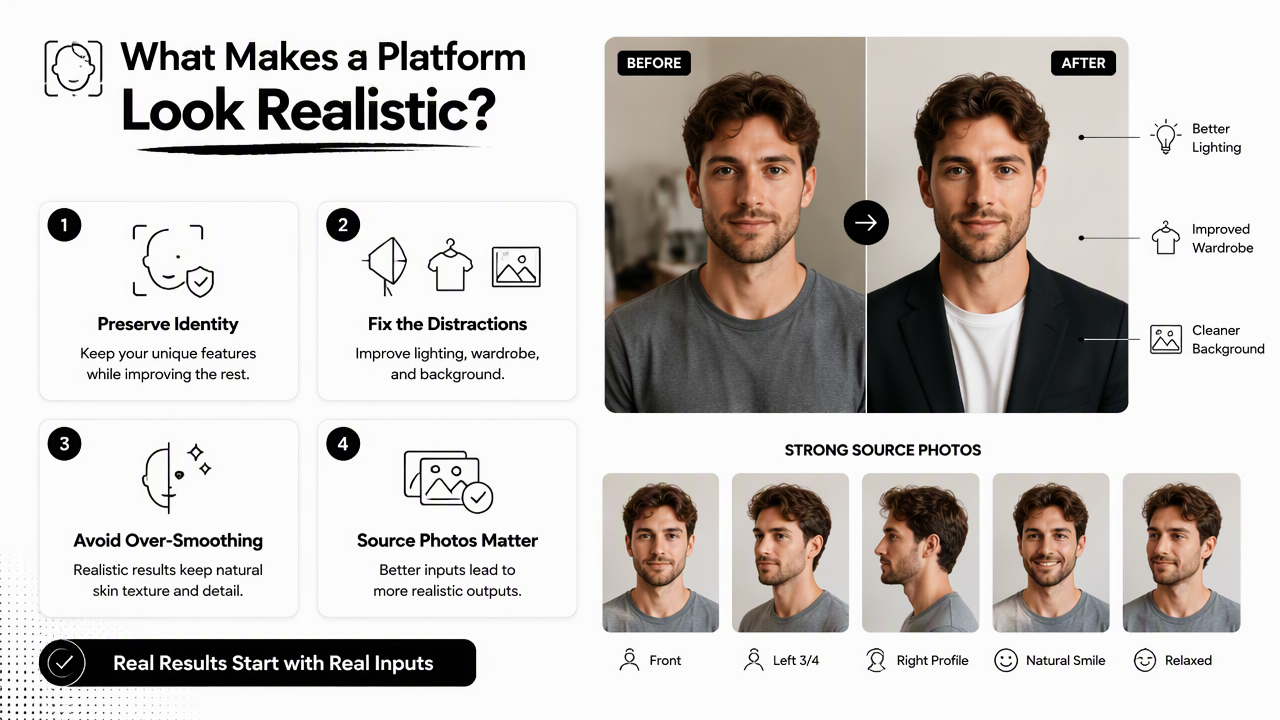
Realism depends heavily on source photos. Clear uploads with varied angles, natural expressions, and consistent facial details produce better results across both services. Low-light selfies, heavy filters, sunglasses, and extreme poses can confuse any generator.
Try It On AI tends to suit users who want a polished business image across multiple visual styles. Headshot Kiwi is appealing when the goal is a clean, fast profile refresh and the user wants fewer setup choices. For LinkedIn-specific use, a dedicated LinkedIn resume headshot generator may be a better next step when the main requirement is a profile photo that reads as professional at small thumbnail size.
Realism signals that matter most
- Face consistency: eyes, jawline, smile shape, and age should remain recognizable.
- Skin texture: slight texture looks more credible than plastic-smooth retouching.
- Lighting direction: shadows should match the face, neck, and clothing.
- Background fit: office, studio, outdoor, or neutral backdrops should match the intended use.
- Hands and accessories: cropped headshots reduce common AI issues with fingers, jewelry, and glasses.
A practical test is simple: the final image should pass as a recent professional photo, not a glamour render. Hiring managers, clients, and followers rarely inspect pixels, but they quickly notice a face that looks inconsistent with other online photos.
How do clothing, expressions, and editing compare?
Try It On AI has the edge for users who want wardrobe variety and polished expression options, while Headshot Kiwi works best when a clean, conventional profile look is enough.
Clothing matters because headshots are interpreted in context. A blazer signals leadership or consulting, a fitted sweater can feel approachable, and a simple shirt works well for technical or remote roles. AI tools can generate outfits quickly, but wardrobe accuracy matters more than wardrobe quantity.
Expression quality also separates useful images from awkward ones. A neutral expression can look serious on LinkedIn but cold on a creator profile. A wide smile can work for coaching, real estate, or customer-facing roles, but it may feel too casual for finance or law.
A headshot should match the role, not just the face. The same person may need one image for LinkedIn, another for a founder bio, and another for a social profile.
Best style choices by use case
| Use case | Strongest style | Better platform tendency | Why it works |
|---|---|---|---|
| LinkedIn job search | Neutral background, smart jacket | Try It On AI or Looktara | Professional and easy to crop |
| Founder bio | Clean studio, confident expression | Try It On AI | Supports investor and press use |
| Freelancer profile | Warm light, approachable smile | Headshot Kiwi | Fast and low-friction |
| Creator media kit | More personality, varied outfits | Try It On AI | Better for multiple channels |
| Dating app profile | Natural expression, casual styling | Headshot Kiwi | Less corporate feel |
Editing flexibility should be judged by output usefulness. If a platform gives many images but only two look authentic, the practical value is low. If a simpler tool produces one strong profile-ready image quickly, that can be enough.
Looktara is also useful for people who want professional images mapped to specific profile contexts rather than generic portraits. For example, creators preparing commerce pages can consider a Shopify resume headshot generator, while visual-first professionals may prefer a Pinterest resume headshot generator.
Who should pick which tool in 2026?
Try It On AI should be picked by users who need polished variety, while Headshot Kiwi should be picked by users who want a quick, simple profile refresh.
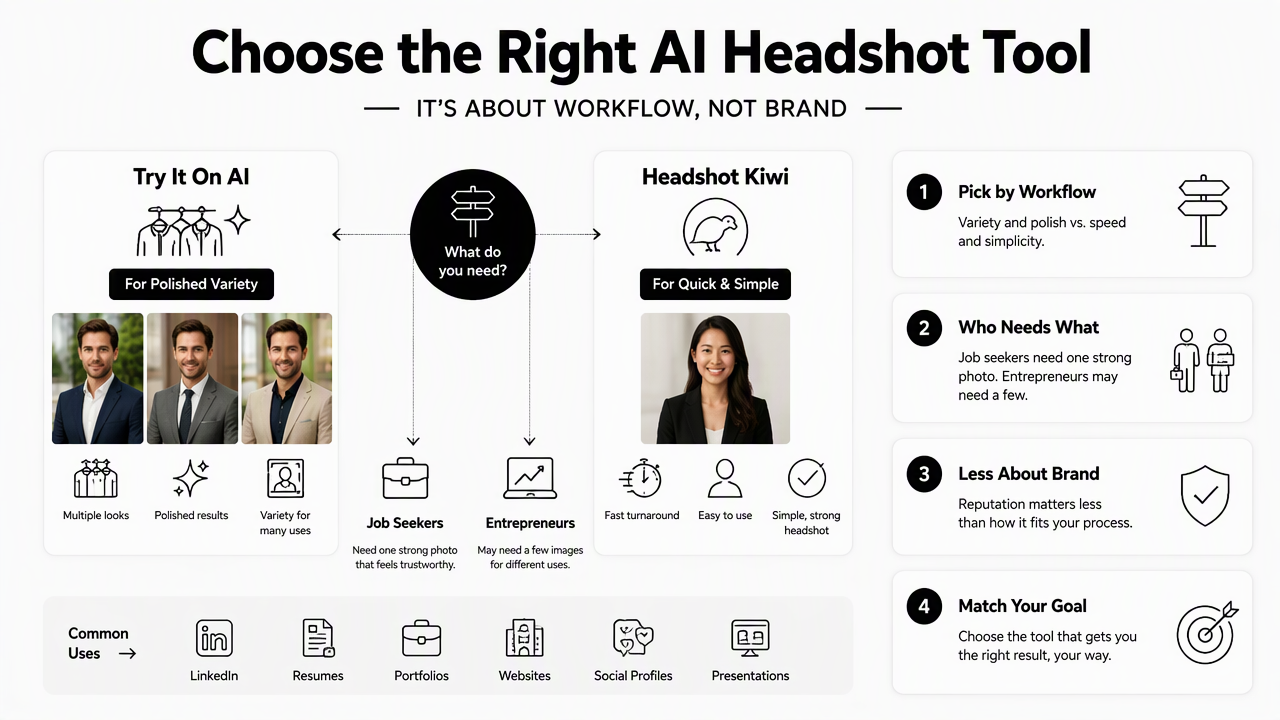
The decision is less about brand reputation and more about workflow. Job seekers often need one strong photo that feels trustworthy. Entrepreneurs may need a few images for LinkedIn, pitch decks, press kits, and company pages. Creators and influencers usually benefit from more visual range.
AI headshot tools also compete with the traditional photography process. Studio sessions can still win for high-stakes executive campaigns, but AI tools are faster, cheaper, and easier to repeat when hairstyles, roles, or brands change.
Decision guide by audience
- LinkedIn users: choose the tool that produces the most natural face at small size. Try It On AI has an advantage when several professional looks are needed.
- Entrepreneurs and business owners: choose broader styling if images must work across websites, speaker bios, and investor decks. Try It On AI usually fits this need better.
- Content creators: choose expression and outfit variety. A single corporate portrait may feel too narrow.
- Remote workers and freelancers: choose speed and clarity. Headshot Kiwi can be enough when the goal is a clean profile update.
- Dating app users: choose authenticity over corporate polish. Casual styling and natural expressions matter more than boardroom lighting.
The Looktara platform fits users who want a guided profile-photo outcome rather than a long round of trial and error. It is especially relevant when the goal is a current, credible image for work profiles, creator pages, or personal branding. For direct access, head to looktara.com.
Frequently asked questions
A FAQ is a curated set of frequently asked questions and answers that addresses key unknowns or common misunderstandings about a topic. In this comparison, the main concerns are realism, speed, suitability for LinkedIn, and whether AI-generated photos can replace studio photography.
Is Try It On AI better than Headshot Kiwi?
Try It On AI is better for users who want more polished variety, broader clothing options, and multiple professional looks. Headshot Kiwi is better when speed and simplicity matter most. The stronger choice depends on whether the final image must support a single profile update or a wider personal-brand presence.
Is Headshot Kiwi good for LinkedIn photos?
Headshot Kiwi can be good for LinkedIn when the source photos are clear, current, and varied. The strongest LinkedIn result should show a recognizable face, simple background, realistic lighting, and professional clothing. If the output looks overly smooth or too casual, another generation style or platform may be needed.
Do AI headshots look fake?
AI headshots can look fake when facial features shift, skin texture disappears, lighting conflicts with the background, or clothing details appear distorted. Strong input photos reduce those issues. The most credible results usually look lightly polished rather than heavily redesigned, especially for LinkedIn, resumes, and company bios.
How many source photos are needed?
The number varies by platform, but more clear and varied source photos usually improve consistency. One SERP snippet for Headshot Kiwi mentions uploading 13 selfies, which suggests a guided minimum. The best inputs include different angles, natural expressions, and good lighting without filters or sunglasses.
What is the safest choice for a fast profile refresh?
The safest choice is the platform that gives a clean, recognizable, profile-ready image with minimal editing. Headshot Kiwi is attractive for speed, while Try It On AI is stronger when more style options are needed. With Looktara, users can focus on a specific professional profile outcome and visit looktara.com to start.
Conclusion
Try It On AI vs Headshot Kiwi comes down to the job the image must perform. Try It On AI is the stronger pick for polished professional variety, founder branding, and multi-platform use. Headshot Kiwi is the practical choice for a fast, simple refresh when one clean profile image is enough.
The next step is to define the intended use before paying for any generator: LinkedIn, founder bio, creator kit, freelance profile, or dating app. Then choose the tool that matches that context, upload clear recent photos, and keep only images that still look recognizably human and current. For a guided alternative focused on profile-ready imagery, Looktara is worth testing alongside both platforms.
Generated by EarlySEO.com