
TL;DR
AI headshot generators are the fastest alternative to photo booth sessions when speed, profile consistency, and remote access matter most. Phone portraits work for low-stakes updates, coworking photo booths suit scheduled local access, and studios remain strongest when strict authenticity or art direction is required.
A professional headshot no longer requires waiting for a conference booth, booking a studio, or hoping an event photographer captures the right angle. The strongest AI headshot generator alternatives to photo booth sessions now cover job searches, LinkedIn refreshes, founder pages, newsletters, dating profiles, and creator media kits with far less scheduling friction. Looktara fits this shift by giving professionals a faster route to polished profile imagery without attending a one-day event or renting a physical setup.
Table of Contents
What are AI headshot generator alternatives to photo booth sessions?
AI headshot generator alternatives to photo booth sessions are faster ways to create professional profile photos without relying on a physical kiosk at an event, office, mall, or coworking space. The main options are AI headshot tools, smartphone portrait workflows, coworking-space booths, and traditional studio photography.
Photo booth: A photo booth is a vending machine or modern kiosk with an automated camera and image-processing system; Wikipedia's photo booth definition notes that most modern booths are digital rather than film-based.
The keyword distinction matters in 2026 because many event vendors now use AI inside physical booths. Snapmatic's event-focused page, for example, describes an AI photo booth that creates corporate headshots in about 30 seconds, based on the SERP research provided. That speed works well at conferences, but it still requires physical attendance.
Key insight: the best replacement depends less on whether AI is involved and more on who controls the setting, timing, wardrobe, retouching, and final image use.
Photo booth sessions remain useful for employee events, recruiting fairs, and conferences. The gap appears when a single person needs a headshot today, a remote team spans multiple cities, or a creator needs several looks for LinkedIn, newsletters, Instagram, and dating apps.
Which headshot option fits the job best?
The right headshot option depends on urgency, quality expectations, budget tolerance, and whether the image must document a real capture or simply represent a professional identity. AI tools win on speed and convenience; studio sessions win on direction, authenticity, and high-end control.
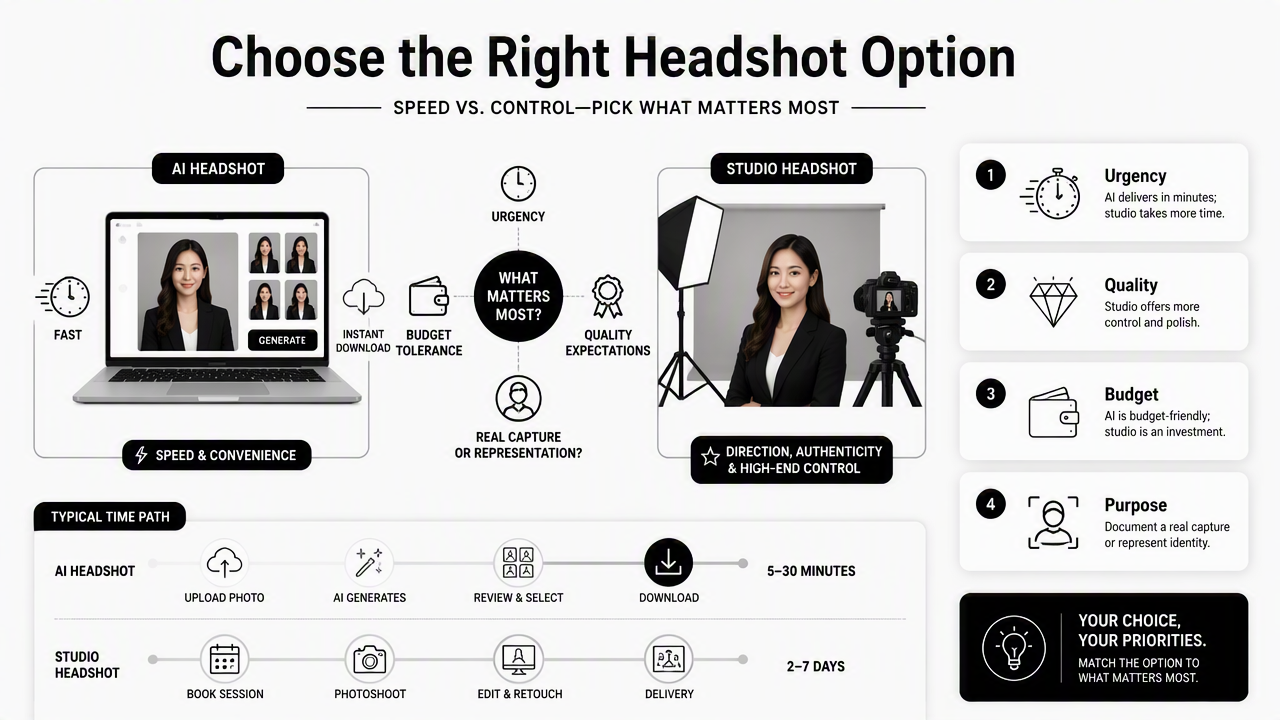
Comparison of modern headshot choices
| Option | Typical time path | Control | Best fit | Main tradeoff |
|---|---|---|---|---|
| AI headshot generator | Same day in many workflows | High control over style variety | LinkedIn, resumes, personal brands, remote teams | Depends on source-photo quality |
| Phone portrait | Minutes to an hour | Medium control over lighting and background | Casual updates, dating apps, creator tests | Requires posing and editing skill |
| Coworking photo booth | Scheduled local visit | Low to medium control | Members, local professionals, quick office shots | Limited availability and styling |
| Event AI photo booth | During an event | Low individual control | Conferences, recruiting fairs, corporate activations | Attendance required |
| Traditional studio | Days to weeks including booking | Very high control | Executives, press kits, regulated use cases | More time and coordination |
AI headshot generators are often the best fit when one person needs multiple professional-looking options across platforms. A job seeker can test a conservative LinkedIn image and a warmer resume image, while a founder can create a board-facing version and a more approachable newsletter version.
Phone portraits work when authenticity matters more than polish. Natural window light, a simple background, and a clean crop can outperform a rushed booth image, especially for dating apps or creator profiles where personality counts.
Coworking booths and event booths make sense when a group is already in the same building. Lucky Shots positions AI headshot photo booth rentals around events and branded outputs in the research data, which points to a group-experience use case rather than a solo profile-refresh workflow.
Traditional studios still matter for legal directories, executive press rooms, academic profiles, and public speaking pages. A real photographer can direct expression, posture, clothing, lighting ratio, and brand consistency in ways automated systems may not fully match.
How should professionals choose between AI, phone, booth, and studio?
Professionals should choose by matching the headshot method to the risk level of the profile, the number of final images needed, and the amount of schedule flexibility available. A low-risk social refresh can use a phone portrait, while a company-wide leadership page may justify a studio or controlled booth workflow.
Decision checklist for faster selection
- Define the platform. LinkedIn, resumes, founder bios, newsletters, Shopify profiles, Pinterest, Instagram, and dating apps reward different image styles.
- Set the authenticity need. Credentials-heavy profiles may require real capture, while personal-brand pages may only need an accurate, polished representation.
- Check scheduling friction. Remote workers and freelancers often benefit from asynchronous tools.
- Count final-image needs. One image favors a booth or phone. Several styles favor AI or studio packages.
- Plan outfit and grooming. Good input improves every method, including AI.
- Review usage rights. Business use, ads, speaker pages, and product pages may need clearer licensing.
A LinkedIn-focused professional who needs an efficient upgrade may prefer a specialized generator such as a LinkedIn resume headshot AI generator. A creator building visual consistency across content might pair profile imagery with LinkedIn product-style visuals or Instagram product photo generation when personal brand and business content overlap.
For newsletters, trust matters because the face beside a byline often sets the tone before the first sentence. A polished but approachable headshot can support an author bio, sponsor deck, or welcome email; newsletter resume headshot generation is a natural fit for that kind of repeat-use asset.
Dating-app users and social creators should be more cautious with overly formal headshots. A profile photo that looks too corporate can feel stiff in casual contexts, while a lightly edited phone portrait may feel more believable. The best choice reflects the social setting, not only image sharpness.
How Looktara handles faster professional headshots
Looktara handles faster professional headshots by focusing on practical profile outcomes instead of event-based capture. The Looktara platform is most useful when a person needs polished image options for work, social presence, or brand channels without waiting for a booth schedule.
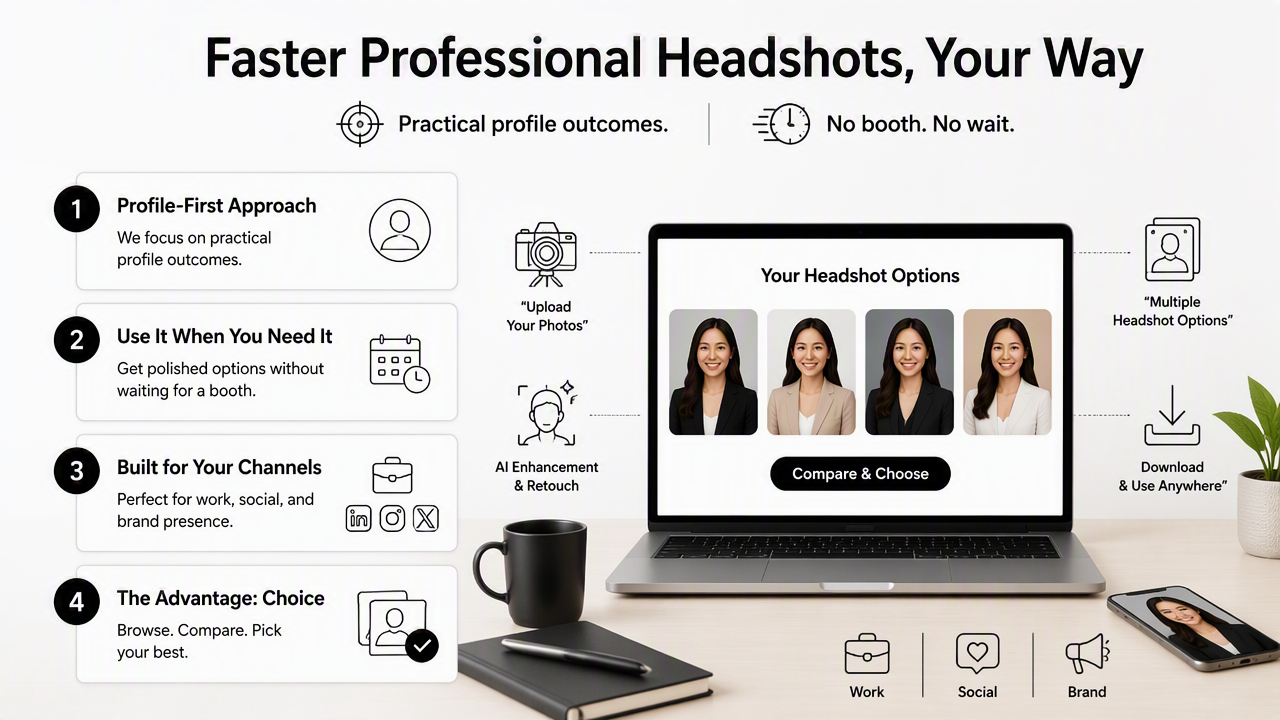
The clearest advantage is choice. A photo booth usually produces a small set of outputs from one moment, one background, and one lighting setup. An AI workflow can support multiple professional moods, such as warm founder, confident job candidate, fitness professional, or newsletter author.
Strong headshots do not need to look artificial; they need to look intentional, current, and appropriate for the platform where they appear.
Looktara also supports mixed personal-brand needs. A fitness coach, consultant, creator, or solo business owner may need a resume-ready image plus supporting visuals for content channels. Pages such as Shopify resume headshot generation and Pinterest resume headshot generation show how profile imagery can be adapted for different publishing contexts.
The best workflow starts with clean input photos, consistent grooming, and a clear target use. Then the final headshot should be checked for facial accuracy, eye clarity, natural skin texture, and brand fit before appearing on public profiles. For a direct start, visit looktara.com and choose the profile context that matches the intended use.
What to expect from headshot workflows in 2027
Headshot workflows in 2027 will likely blend AI generation, real capture, identity controls, and platform-specific formatting. The market is moving away from one-size-fits-all headshots and toward sets of images tuned for hiring, selling, speaking, publishing, and social discovery.
Three changes are already visible from the current SERP patterns. Event vendors are promoting AI booths for throughput, AI headshot services are competing on convenience, and real-capture providers such as Iris Booth are drawing a clear line between generated images and authenticated photography. That split will probably become more important as employers and institutions define photo standards.
For most professionals, the practical move is to keep two image categories ready:
- Professional proof image: a real photo or lightly edited portrait for high-trust uses.
- Brand image set: AI-assisted or studio-styled options for LinkedIn, newsletters, creator pages, and business bios.
- Casual social image: a natural portrait for dating apps, community profiles, or informal networks.
AI headshots should also become more platform-aware. A resume photo, where allowed, needs different framing than a newsletter byline. A LinkedIn banner-adjacent portrait needs different visual weight than a Pinterest profile image. Better tools will guide those choices rather than only producing generic corporate portraits.
Frequently asked questions
Are AI headshots better than photo booth sessions?
AI headshots are better than photo booth sessions when speed, remote access, and style variety matter most. Photo booth sessions are better when an event needs a fast, shared setup for many attendees. The choice depends on whether the goal is individual control or group throughput.
When is a real studio headshot still worth it?
A real studio headshot is worth it for executives, press kits, regulated professions, public speakers, and teams that need strict visual consistency. A photographer can direct expression, posture, lighting, wardrobe, and background in real time, which remains valuable for high-stakes public profiles.
Can a phone portrait replace a professional headshot?
A phone portrait can replace a professional headshot for casual profiles, early job-search drafts, creator testing, and dating apps. The result depends on lighting, background, camera height, expression, and editing restraint. For executive, corporate, or brand-heavy uses, a dedicated workflow usually produces a stronger result.
What source photos work best for AI headshot tools?
AI headshot tools work best with clear, recent, well-lit source photos that show the face from several angles. Heavy filters, sunglasses, extreme crops, and old images can reduce accuracy. Good source material helps the final result look polished while still matching the person's real appearance.
Conclusion
AI headshot generator alternatives to photo booth sessions give professionals more control over timing, style, and platform fit. The smart choice is simple: use AI for fast profile sets, phone portraits for casual authenticity, coworking or event booths for local convenience, and studios for high-stakes real capture. For a faster next step, compare the intended platform, prepare clean source photos, and head to looktara.com to create a polished headshot set that fits the actual profile goal.
Generated by EarlySEO.com